
There are many plugins available for customizing your WordPress theme or creating a 100% unique layout. You’ve probably already heard of Beaver Builder, but especially Elementor and Divi. This article provides a comparison to help you make the right decision. Elementor vs. Divi: Which Is the Best Page Builder? We’ll take a look at what the free version of Elementor offers, the user-friendliness of Divi’s interface, and other key factors. By the end of this article, you’ll know which solution to choose for building your WordPress pages!
Let's start with the introductions: What are DIvi and Elementor?
Both programs are tools for building elegant and functional websites on WordPress without needing advanced skills in WordPress development or web design.
Divi is a WordPress plugin for building websites, but Divi also has its own WordPress theme. The Divi theme offers some customization options, but it differs from theme builder , which uses a plugin to let you customize your site’s design and features from start to finish.
Elementor is a plugin available in both free and paid versions that serves the same purpose as Divi. Keep in mind that Elementor does not offer a theme—only the site builder. Considered easier to learn than its main competitor, you can choose to use the free version of Elementor. However, when building your websites, it’s essential to compare the two tools. Elementor vs. Divi—which one will win you over?
Elementor vs. Divi: The Similarities That Will Make It Hard to Choose
Whether you’re building websites from scratch or customizing existing themes, Elementor and Divi are the best options compared to other WordPress page builders, such as Beaver Builder. Here, we’ll highlight the factors that, at first glance, make it difficult to determine which of these two leading WordPress page builders is superior.
Visual Interface
Both pages builders are very visual and intuitive to use, based on dragging and dropping modules. To position the various elements on your website’s pages, simply click on the desired widget and drag it to the desired location. This drag-and-drop feature simplifies the layout of your pages’ elements and is ideal for beginners.
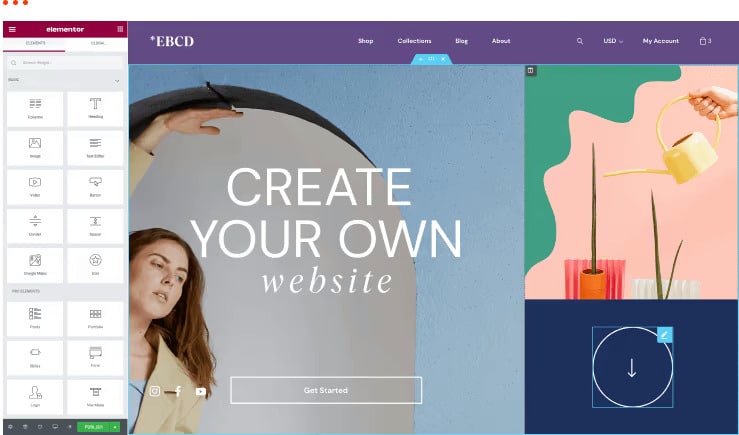
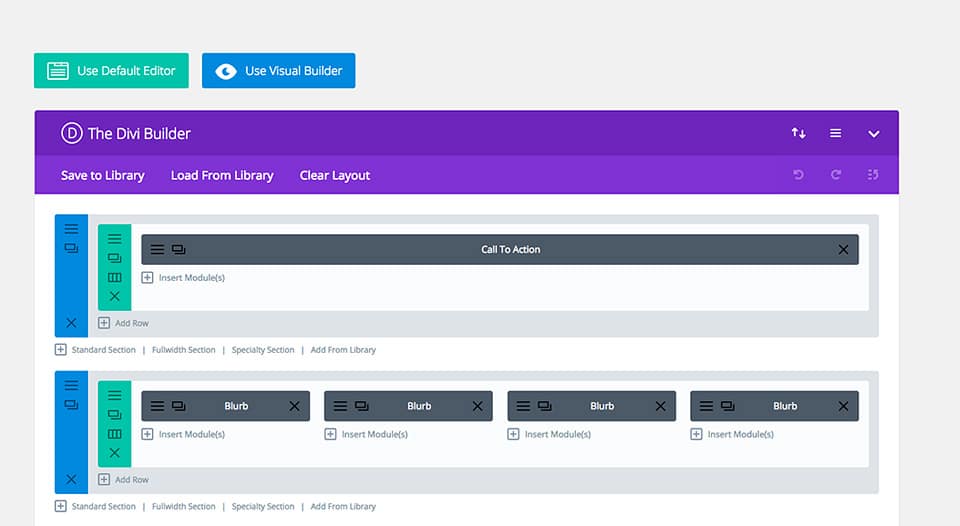
Whereas Divi displays elements within the layout, Elementor offers a blank canvas with a sidebar on the left side of the screen. Depending on how comfortable you are with page and your personal preferences, you may already be leaning toward one page builder or the other. But this criterion alone isn’t and your personal preferences, you may already be leaning toward one page builder or the other. But this criterion alone isn’t enough to decide between Elementor and Divi.
Feature Widgets
This comparison criterion will be more subjective than others. In fact, the styling options are quite similar between Elementor and Divi. Both stand out from the rest of the competition, but the differences lie in the details.
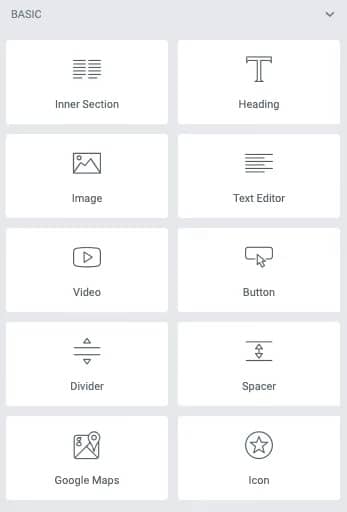
The various widgets in the plugin are relatively similar in Elementor and Divi. There are still some major differences between the two, but generally speaking, you can customize the style of your websites using:
- Scrolling effects (parallax);
- The ease of positioning the modules;
- Customizable spacing;
- Animation effects;
- The ability to customize section separators.
Both pages builders will offer a wide range of features for building your WordPress theme, including the footer, header, the structure of your blog posts, and archive pages.
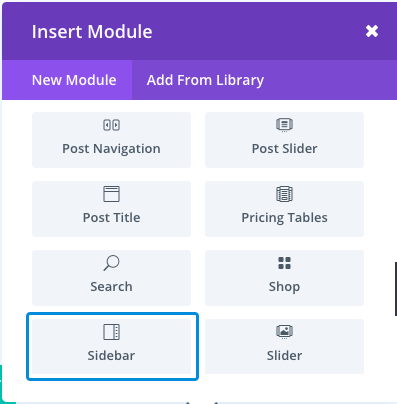
Responsive Design
Given that an increasing share of web traffic comes from mobile devices, it’s clear that offering a fully responsive website is essential. Once again, comparing Elementor and Divi on this criterion isn’t really necessary, since both page builders offer the same options.
Both tools allow you to build websites that are fully compatible with mobile devices. Just like with other themes, you can use the Divi Builder and the Elementor Builder to hide certain modules on smartphones or tablets to maximize responsiveness.
Theme Compatibility
While the user interfacesof Elementor and Divi are user-friendly—even for beginners—they’re very handy for customizing the design of any WordPress page. In fact, while both tools let you build a WordPress theme from scratch, you can also use an existing theme for your web pages and add additional features to it using Elementor or Divi Builder.
In fact, both WordPress page builders are fully compatible with most WordPress themes—or at least those that adhere to the CMS’s coding standards. However, Divi offers its own theme for those who want to take minimalism to the extreme.
Compatibility with the Gutenberg editor
Whether you choose the Divi Builder or the Elementor Builder, you’ll be able to use the Gutenberg editor to write your pages and posts with maximum ease. This wasn’t always the case just a few years ago, when the Divi Builder often conflicted with the Gutenberg content editor.
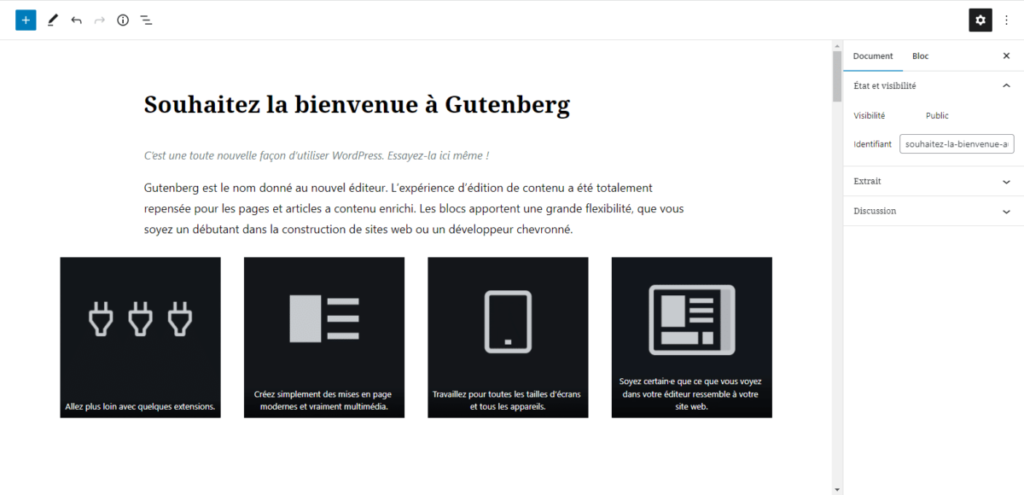
This makes formatting much easier for users who aren't comfortable usingthe Elementor or Diviinterface to write their blog posts.
Support and Community
If you need help using these two WordPress plugins, there are many different options available. Elementor vs. Divi: They’re on par when it comes to support availability and community-driven assistance. Here are a few places to find answers:
- The premium tools support team;
- A Facebook group;
- Frequently Asked Questions;
- A documentation library;
- Video tutorials.
Elementor vs. Divi: The Key Differences Between These Two WordPress Site Builders
Now that we’ve reviewed the common features that makeElementor and Divi market leaders, let’s take a look at how these two WordPress page builders differ from one another, while each has its own dedicated fan base. Elementor vs. Divi: Which one will you prefer?
Let's talk about the most well-known difference when comparing Elementor and Divi: the price
Pricing for the two page builders is very simple, yet very different.
Elementor Pricing
- Elementor offers a free version;
- A website: US$49 per year;
- 3 websites for US$89 per year;
- 25 websites: US$159 per year;
- 100 websites: US$499 per year;
- 1,000 websites: US$399 per year.
The Price of Divi Builder
- There is no free version, but there is a “money-back guarantee” for 30 days after purchase;
- US$89 per year for an unlimited number of sites;
- US$249 for a lifetime license for an unlimited number of sites.
Elementor Pro
For a single website
- Free, accessible version of Elementor
- Elementor Pro Add-on
- Premium Customer Support
- Elementor Kit Library
Divi
For a single website
- No Free Version
- Access to Divi, Extra, Bloom, and Monarch
- Premium Customer Support
- Website Template Library
Depending on your needs, one or the other of these WordPress page builders will fit your budget. Divi is objectively less expensive, but what about ease of use?
Are both WordPress website builders just as easy to use?
The Elementor builder is easier to master and more intuitive than Divi. At least, that’s what most users find. In reality, there are so many content options, site packs, and widgets available in the Divi builder that they’re inevitably harder to find if you’re not familiar with the tool.
Elementor and Divi offer the same ease of use, but learning and mastering the basics will be much faster with Elementor than with Divi. It’s also worth noting that you can learn Elementor for free using the freemium version, whereas you have to purchase a Divi license just to start getting the hang of it by modifying the Divi theme or customizing a site with the Divi Builder.
Comparison of the Template Libraries for Elementor and Divi
As mentioned above, Divi offers a much wider range ofoptions, templates, and widgets. To counter this argument, it’s reasonable to ask whether you really need all that choice to build 3 to 10 websites. Unless you plan to build a highly sophisticated PBN, Elementor is sufficient for “normal” use. Web developers and digital agencies, on the other hand, will be more drawn to the nearly infinite variety offered by Divi Builder.
Between Elementor and Divi, is there a page builder that’s faster and more efficient?
According to various independent tests, Elementor appears to perform better than Divi. In fact, the file sizes and the multitude of availableoptions seem to make sites built with the Divi page builder run slightly slower. Think carefully about your priorities when choosing between these two WordPress page builders! Since page load speed is an increasingly important SEO factor, be sure to weigh the pros and cons carefully when evaluating your options.
Are you a fan of shortcodes? Choose Divi over Elementor
If you’re looking for a page builder that has built up an extensive library of shortcodes, then Divi will win you over. There are shortcodes for just about anything you want to do. Comparing Elementor and Divi isn’t really relevant since Elementor doesn’t offer this feature—it just lets you call up Elementor Pro templates or widgets. Furthermore, if you ever want to switch from Divi to Elementor or Beaver Builder, you’ll have to rewrite all those lines of code that were shortened and automated in Divi. Once again, your choice will depend on your goals and personal preference.
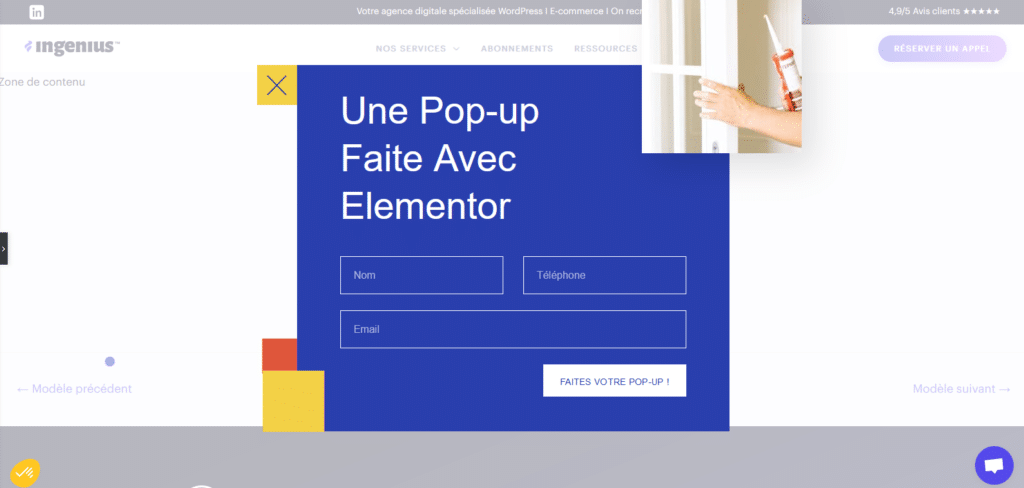
Want to create pop-ups on your websites? Elementor can help
If you want to capture leads, display promotions on your website, or offer a floating login window, Elementor is the perfect choice. In fact, when comparing Elementor and Divi for pop-ups, the Elementor builder comes out on top because Divi’s many features don’t offer the same ease of use. However, if you’re set on using Divi and your websites require pop-ups, you’ll find the WordPress plugins you need.
Need to do A/B testing? Divi Builder will be your go-to tool
If you’re growing your marketing through ongoing A/B testing, then Divi will come out on top in this round of Elementor vs. Divi. That’s because you can test any module with your audience. Your test can focus on campaign headlines, buttons, images, or any other elements that might influence your prospects’ decision-making.
Elementor vs. Divi: Both tools are of comparable quality but serve different purposes
We’ve explored the features and drawbacks of each WordPress page builder. The comparison focuses on the market leaders: Elementor vs. Divi. Based on these analyses, can we determine a clear winner? Which is the best page builder?
Elementor vs. Divi: Which One Wins?
It's impossible to simply choose between the two pages builders. Each has its own advantages and disadvantages. Taking it a step further, what are advantages for one may be disadvantages for certain users—and vice versa. Depending on individual needs and level of expertise in the field, Elementor may be more user-friendly, while Divi may be more cost-effective in the long run or for high-volume projects.
What criteria should you use to choose the right WordPress website builder?
So the question is: Which WordPress page builder is best for your needs? Here are a few suggestions to help you make your choice.
Required Features
Are you keeping a close eye on your conversion rate and determined to capture as many leads as possible with high-impact pop-ups? Elementor offers a feature that Divi Builder doesn't.
Do you want to automate—or at least speed up—your work to create a clean, fast interface? Shortcodes let you easily add extra features to your theme using shortened code snippets that save you from having to write line after line of code. That’s where Divi comes in .
If you like to test as many options as possible before deciding on your final strategy, Divi is the perfect choice for you. This page builder is designed for pros, such as digital agencies that need to build many websites, or developers who use A/B is important.
The budget you have to allocate to your WordPress website builder
The main advantage of Divi is that you can purchase a lifetime license for an unlimited number of sites, unlikeElementor, which offers subscriptions. When you stop paying, what will happen to your sites? At this point in the comparison, Elementor vs. Divi: 2-2.
However, Elementor also offers a free version that lets you save money on a Divi license. It all depends on your project: how many websites do you want to manage, and do you plan to build WordPress pages over the next few years?
The issue of learning how to use the tools is also important when estimating your budget. Divi doesn't offer a free version, has more features, and takes longer to master if you're not familiar with how a page builder.
In addition to these few criteria, consider your personal preferences
All of these points are relatively objective. Also keep in mind that you’ll need to enjoy working with the user interface of one tool or the other to be able to fully utilize their potential. Our recommendation, then, would be to testElementor’s free features and then sign up for a Divi Builderplan: you’ll have 30 days to get a refund on the latter, and you’ll finally know which tool you prefer! As you can see, to find out which page builder is best, you’ll need to try them out yourself based on your specific needs and constraints.
And if you don’t have time to build a 100% custom WordPress theme for your websites, consider reaching out to Ingenius: our experts are here to guide you or assist you in building a high-performing website.
In Summary: Elementor vs. Divi—A Comparison Chart
| Points of Comparison | DIVI | ELEMENTOR |
|---|---|---|
| Visual Interface | Divi offers a pre-designed layout system that can be customized using a drag-and-drop interface | Elementor lets you start with a blank page and use drag-and-drop on the vertical bar |
| Feature Widgets | Divi comes with 46 modules + many other third-party add-ons | Elementor comes with 29 modules in the free version and nearly 30 more in the Elementor Pro version |
| Responsive | Divi is 100% responsive | Elementor is 100% responsive |
| Theme Compatibility | Divi is compatible with most WordPress themes and has its own theme | Elementor is compatible with most themes |
| Gutenberg Compatibility | Divi is fully compatible with the Gutenberg editor | Elementor is fully compatible with the Gutenberg editor |
| Support & Community | Divi offers premium support, a support group, resources, and an academy to help you learn | Elementor offers premium support, a support group, resources, and an academy to help you learn |
| Ease of Use | Divi is more complicated to get the hang of and will require more time to learn before you can master it | Elementor is easier to learn thanks to its intuitive interface |
| Template Library | Divi has more than one layout pack, which, when combined, can create an infinite number of possibilities. | Elementor has nearly 100 pre-designed templates |
| Using the Shortcode | Divi offers a wide range of ready-to-use shortcodes | Elementor does not have a built-in shortcode but supports shortcodes |
| Creating Pop-ups | Divi cannot create pop-ups | Elementor can create your pop-up and offers a library of pre-designed pop-ups |
| A/B testing | Divi offers A/B testing | Elementor does not offer A/B testing without third-party plugins |
| Price | Divi is less expensive at $89 per year for an unlimited number of websites | Elementor is more expensive at $49 per year for a single site |