
As you get started with WordPress, you’ll almost certainly come across one or more sidebars very quickly. In fact, the sidebar is used to display certain information that isn’t included in a web page’s main menu. A sidebar can appear to the left or right of the content, at the top or bottom, and sometimes it may even be hidden. What exactly is a sidebar on a WordPress site? Is it useful to have one, and how can you customize it?
Understanding What a Sidebar Is

Also known as a "barre latérale" in French, a sidebar is an area of a WordPress theme where you can place widgets. In blog-style themes, the sidebar is often the right-hand column.
For example, you’ll find a search bar, a list of recent articles, newsletter sign-up forms, and ads, among other things. A sidebar may also include social media buttons or category links. As you can see, there’s plenty you can find there.
As a result, it’s possible to have multiple sidebars. Theme designers can, for example, place one on each side of the main content. There may also be one only on the left. In many themes, there is also a sidebar in the footer.
What are the benefits of sidebars in WordPress?
Sidebars are sections that are very useful to have on your website. In fact, they’re an excellent way to hold a visitor’s attention for longer and lower the bounce rate. Creating sidebars on your website offers a wide range of benefits.

Provide relevant content
Sidebars allow you to display related articles. This helps provide relevant content to visitors and, in turn, keeps them on the site longer by helping them learn.
Simplify navigation
Sidebars also make navigation easier. You can use them to display your site’s categories, helping visitors move from one category to another and easily find your various posts without wasting time searching. This helps satisfy your visitors’ impatience and provides them with the answers to their questions.
Collect email addresses for marketing purposes
A sidebar is also a perfect place to include a form for collecting email addresses from your many visitors. To build visitor loyalty and achieve results, sending newsletters is one of the most effective marketing tools you can use. Through these emails, you can send offers, content, or discounts on your products directly to their inboxes.
Ensure content sharing
Sidebars can also help you encourage visitors to share your content on social media. You can add share buttons to your sidebars for your visitors to use. This is particularly important for search engine optimization (SEO). By encouraging these shares, you can easily increase the number of page views.
Offer special deals
Sidebars can also help you showcase special offers. As an online business that sells products or services, you have plenty of options for suggesting timely offers to your visitors in a relevant way.
It is becoming increasingly clear that sidebars can be used to display everything that matters to you in your efforts to engage with your visitors, answer their questions, and solve their problems.
What is the process for creating a WordPress sidebar?
There are many ways to create sidebars in WordPress. The method you choose will depend on the theme you’re using. Some themes offer a wide range of options, while others are very limited when it comes to creating sidebars.
However, if your theme has limited options for creating sidebars, you can use a dedicated plugin. WordPress lists many plugins for creating sidebars in its official directory.
Creating a Sidebar Using the Block Editor
You can create sidebars using the block editor. There are predefined sidebar templates that you can quickly customize to display on your site. You can also use the tools provided in the editor to design new templates.
To do this, you’ll need to log in to your WordPress admin dashboard. Next, go to the “Appearance” section and then “Editor.” Once you’ve accessed the theme editor, a new interface will appear. Click the “+” button in the upper-left corner to continue.
The interface will then open. In the new interface, click the "Compositions" button to access the templates. To view all the templates, you can also click the "Explore" button. You will then be shown various compositions, sorted by their characteristics.
In any case, you’ll have access to templates that sometimes don’t include sidebars. In such cases, we recommend using the search bar. It allows you to quickly find templates that do include sidebars, choose one, and move on to the customization step. Simply enter the keyword “sidebar” and wait for the search results to appear.
Using a Template to Create a WordPress Sidebar
You can find templates that allow you to create sidebars on either the left or right side of your site. You can choose the template that works best for you. When you click on the template you’ve chosen, it will be added directly to your site. Next, you’ll need to customize the template you’ve selected.
To do this, click the "List View" button to access the template's structure. The button is located in the upper-left corner. The basic structure of the selected template opens as soon as you do this.
To edit a template, scroll through the list view until you reach its block. As soon as you reach the template's layout, it will be immediately selected on the right. Once you're at the template's layout, click on a section of the template. This will open the customization path on the right.
This allows you to add, edit, or delete sections to help you achieve your various goals. When you click the three dots at the top of the block, you’ll see a variety of options. For example, you can edit the block in HTML, duplicate it, remove it, or add groups to it.
Significant Additional Opportunities
In addition, WordPress lets you change the design of the selected template. To do this, click the Settings button in the upper-right corner. Then, click the Block button. This allows you to customize the font size, adjust the shape of the featured image, remove an image or add others, and change the color.
With the image customization tool, you have even more options. For example, you can adjust the default image. You can also replace it by selecting an image from your media library or uploading a new image from your computer.
In addition to the features listed above, you can also add new blocks and include label ranges, social media icons, or pages from your website. All of these options are available simply by clicking the + button.
How do you create a WordPress sidebar manually?
It's also possible to create sidebars without using predefined templates. To do this, stay in the block editor and scroll to the location where you want to add the sidebar. Then, all you have to do is click the + button in the indicated area.
Once you've completed this step, an empty area will appear in the field at the bottom of the section. Click the + button in the empty area again. You'll then see various blocks appear to help you customize your sidebars. By clicking the Columns button, you can create a new sidebar.
Next, choose whether you want a two-column or three-column template . If you choose a two-column template, two columns will be added to your page. However, if you prefer a three-column template, three columns will be added to form the sidebars.
Once the columns have been added, click the + button in each column to insert content. You can add the site title or page titles to one column. The other column can display a list of your latest posts, a calendar, or social media icons. This column can also display the RSS feed, categories, or recent comments.
You can also adjust the position of the elements, change their design, and more. Click the Save button once you're done to apply your changes.
Creating a WordPress Sidebar Using a Widget
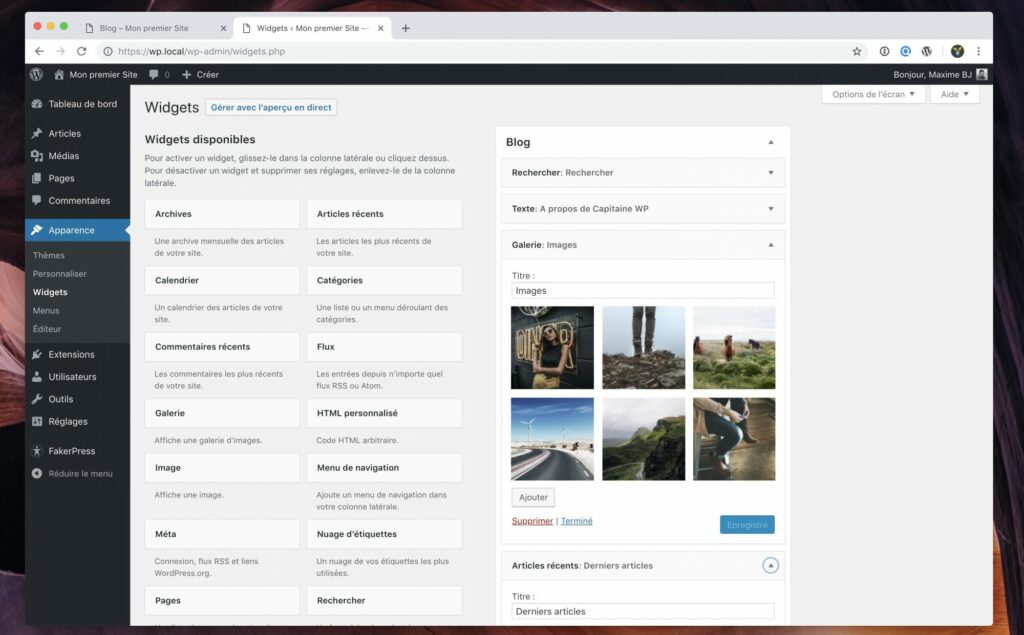
In addition to the first two options, you can also create sidebars using widgets. These are sections provided by each theme to help you customize your site. The number of widgets available depends on your site’s active theme.
Most popular themes include widgets that allow you to customize your site’s footers. They also feature predefined side columns. You can use these side columns to create sidebars on your site.
To do this, the first step is to log in to your dashboard and then go to the Appearance and Widgets section . You will then be redirected to a new interface. In most cases, for themes that support this feature, you can add sidebars on the left and right.
You will then need to choose between the two. Once you've made your choice, click on it to expand the sidebar, which will open and display its contents. Generally, you'll see the sidebar configuration provided by your theme during installation.
To add new items, click the + button in the lower-right corner. Once you do this, you'll be presented with a list of items to add. Add the items as you see fit.
If you want to see all the available options, click " Browse All." WordPress will then give you access to all the options for customizing your sidebar. Once you've finished making your changes, click "Update" to publish your sidebar.
Creating a Sidebar Using the WordPress Customizer
Another method you can use is to add sidebars using the WordPress Customizer. This is one of the easiest methods to use when you're just starting out with WordPress.
To do this, log in to the WordPress admin panel and go to the Appearance > Customize section. Once you’ve done that, you’ll be taken to the site’s customization interface. On the left, you’ll find the customization options. On the right, you’ll see a preview of your changes. Click on the Widgets option to create sidebars.
The interface will then expand, and you’ll need to select the sidebar. Depending on the theme, there are sidebars on the left and right. This is a useful option when you want to create sidebars on both sides. Click on the sidebar you want to customize to expand the interface, then click + again.
At this point, you’ll be presented with various options for customizing the sidebar. Choose the elements you feel are necessary based on your preferences, and proceed to customize. You can preview the changes on the right side of your site. Click “Publish” once you’ve finished making changes to apply them.
Creating a WordPress Sidebar Using a Plugin
The simplest method of all: creating sidebars using plugins doesn’t require any developer skills. All you have to do is choose a plugin from the list suggested in the next section.
Next, you’ll need to install it and move on to the setup step. Each plugin you want to use must be installed on your site. To do this, log in to your dashboard, go to the Plugins section , and click “Add New.” You’ll then be redirected to the official WordPress plugin directory. A search bar allows you to find the plugin you want by keyword.
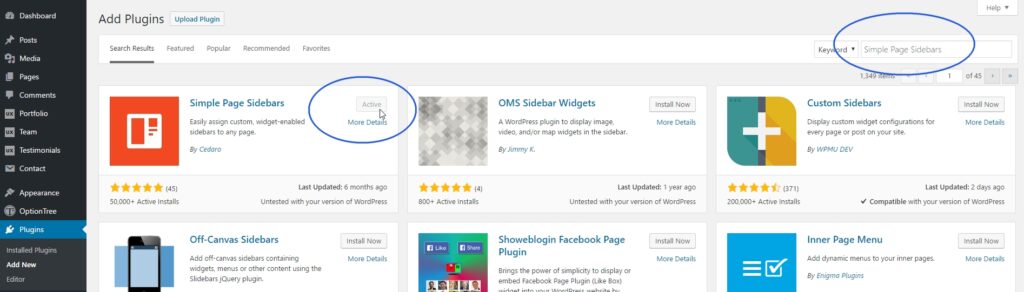
Various useful plugins for creating sidebars
There are many plugins that let you create WordPress sidebars. These include SiteOrigin Widgets Bundle, one of the most popular. By choosing this plugin, you can create sidebars by adding various elements that are useful to your visitors.
There is also Content Aware Sidebars, one of the most powerful tools for creating WordPress sidebars. In particular, it lets you create new sidebars from scratch using a user-friendly interface.
Widget Options is undoubtedly the best in terms of quality and features. Its more than 100,000 active installations attest to this. It offers powerful features for creating and customizing sidebars.
Contextual Related Posts is another useful option for displaying posts on the same topic in a sidebar.
Smash Ballon Social Photo Feed and Smash Balloon Social Post Feed are two useful plugins for customizing a sidebar. With the first one, you can display your Instagram photos on your website. As for the second, it lets you easily align your various posts in the sidebar.
Custom Sidebars refers to a WordPress plugin that lets you add sidebars to any pages or posts on your site. It’s also very handy.
Lightweight Sidebar Manager has over 100,000 installations. This plugin allows you to create sidebars wherever you want on your site. One of its key advantages is that it’s compatible with all themes.
WordPress Sidebar: At a Glance
Sidebars are very important sections of your website. They allow you to display additional and essential information for your visitors. You can also use them to showcase your posts, promote your products, and include a newsletter sign-up form. There are various ways to create sidebars on your website. We’ve listed them in this article so that you’ll have no trouble creating your sidebar whenever you’re ready.