To build a high-performance WordPress website, you’ll definitely need to use plugins. They play a crucial role in many areas, particularly when it comes to website development. This article explains the benefits of plugins and how to install them. By the time you’ve finished this tutorial from start to finish, you’ll have a clear understanding of what plugins are and how they work. Enjoy the read!
Understanding What WordPress Is
WordPress, the world’s most popular content management system, is an open-source CMS. It is written in PHP, which makes it easy to create and manage a website. By using it, users benefit from an intuitive interface that allows them to add and edit content on a website.
Even if you have no coding experience, WordPress is still a very valuable tool for you. In fact, since it’s accessible to everyone, it lets you create websites, blogs, and even e-commerce sites. Its main advantage is that the software is available to everyone and is free.
Absolutely anyone can install it, use it for various tasks and projects, and even modify it without spending a dime. It is, quite simply, the content management system with the largest market share in the world. More than 40% of all websites run on WordPress—a percentage that puts it far ahead of its competitors.
What does “extension” mean?
A plugin is a piece of software that enhances a WordPress site. It includes several features designed to expand options or add more up-to-date functionality to WordPress websites. Written in the PHP programming language, plugins integrate easily with WordPress.
So, even if you don’t know a single line of code, you can use plugins to easily add features to your various websites. There are thousands of free WordPress plugins available in the official WordPress plugin directory. Third-party companies and developers also offer a large number of commercial plugins.
As a website administrator, you can install and uninstall extensions from the admin panel. You can also download them and install them manually using an FTP client. Since most extensions are available for free, keep in mind that they rarely come with technical support.
To do this, you need to exercise good judgment when choosing which ones to install on your website. Some extensions are of higher quality than others, even though some may still be capable of doing the job you need them to do. It’s therefore important to ask yourself a few questions before selecting the best extensions.
The date of its last update can be an indication of its quality. You should also make sure it’s compatible with the latest version of WordPress. When support questions are consistently answered, that’s also a positive sign.
How do WordPress plugins work?
Some people believe that WordPress plugins tend to slow down websites. This is absolutely not the case. Rather, it is only when plugins are poorly coded or of poor quality that they can slow down a website by affecting its load time. When chosen wisely, they enhance the functionality of a WordPress website.
This is done without modifying your core WordPress files. To achieve this, they use entry points known as filter and action hooks. These are provided by the WordPress plugin API to integrate with the source code. These methods and entry points trigger the plugin’s functions at key moments to alter WordPress’s default behavior.
What is the purpose of WordPress plugins?
When we talk about WordPress plugins, we’re actually referring to small software applications that integrate with and run on the WordPress platform. This makes it possible to create virtually any type of website with WordPress—not just blogs.
For example, with WordPress, you can launch an online store or create a job board. You can also create a coupon website or a business directory using the best directory plugins for WordPress.

The same goes for creating a photography website or a wiki site. You could also launch your own podcast website or any other type of site you’d like to create. In fact, whatever you have in mind, you can bring it to life on your WordPress site.
If the feature isn’t available by default in WordPress, you can still find a solution using a plugin. You can find WordPress plugins to optimize SEO, add contact forms, or create galleries. The same goes for improving performance, adding social media buttons, and much more.
Extensions can be very small, providing only a minimal set of features. However, they can also be very large and function as their own platform. To enhance them, extensions with more features may include their own add-ons.
The many plugins available on your WordPress site
You can take advantage of a wide variety of plugins for a WordPress site, each serving different purposes. To name a few, there are plugins for comments, SEO, newsletters, cookies, and performance. You can also find plugins for social media, media management, monetization, and backups.
The same goes for WordPress security plugins, analytics plugins, and GDPR plugins. Here are the main plugins by category. There are, of course, others that you can easily find depending on what you’re looking for.
How do I find the right WordPress plugins?
First and foremost, you need to check which version of WordPress you’re using. This is because you can’t install plugins if you’re using WordPress.com. Several users have already reported that they can’t see the Plugins menu in their WordPress dashboard.
This is because they use WordPress.com, which has limitations compared to WordPress.org. You can only install plugins on WordPress.com if you sign up for their Business plan.
What factors should you consider when choosing an extension?
In the WordPress plugin directory, the options are endless. This is even more true when you consider third-party websites. This vast array of choices can be a challenge, especially for those who are new to WordPress and just need the right plugin for their site. Here are a few important factors you should consider when choosing a plugin for your website.
The Importance of Regular Updates
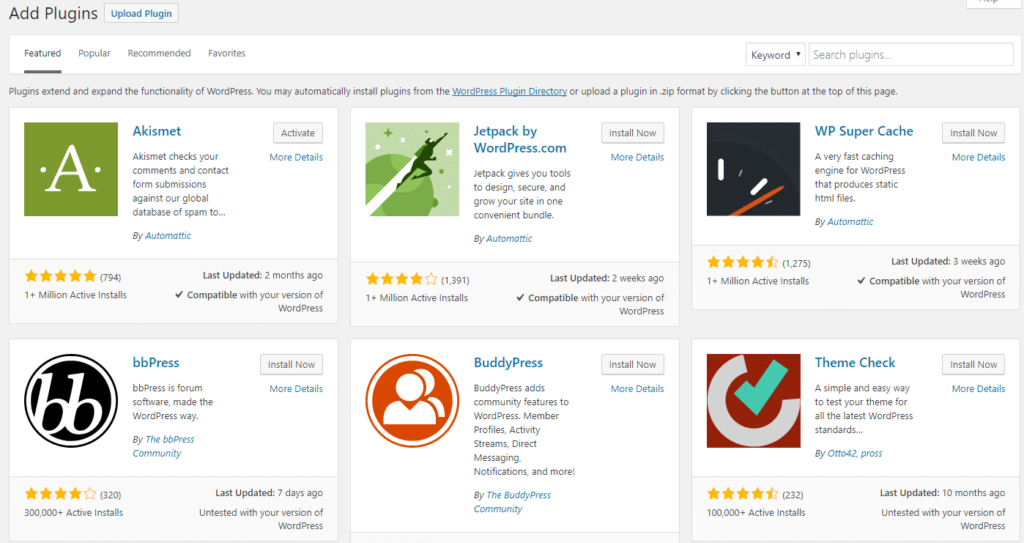
To keep its system up to date and running smoothly, WordPress releases updates very frequently. This ensures that it remains secure, improves performance through new features, and resolves issues. Before installing a plugin, it’s important to check for the latest update.
In that case, you should choose a WordPress plugin that is updated frequently. This will help you avoid security vulnerabilities in most cases. It also shows that the developers are actively working to improve the plugin you’ve chosen on a daily basis.
Another important factor is the number of installations. This is an indicator of the popularity of the WordPress plugin you’ve chosen. Often, the more active installations a plugin has, the better its performance is likely to be.
Reviews can also influence your choice when it comes to a WordPress plugin. In this case, you’ll need to take into account the various user reactions and comments. This will help guide you in choosing a plugin.
Based on this feedback, you’ll get a sense of how the extension performs in real-time situations. You’ll then be able to weigh the pros and cons and choose what works best for you.
Compatibility is another important factor. A plugin is often compatible with the latest version of WordPress when it receives frequent updates. You should always check the description tab to see which version of WordPress is required to run the plugin.
Make sure the extension meets your needs
Long before you get to the point of downloading and installing a plugin on your WordPress website, there are some prerequisites. Among other things, you need to make sure that the developers’ claims are accurate.
To do this, you should read the documentation provided with the extension. You can also check out the extension’s support forums to read the various reviews it has received. Another option is to do a search and read blog posts.
In fact, there are many websites that feature reviews of browser extensions. This is a good practice to ensure that the extension you choose is the right one to meet your needs.
The Importance of Installing Only One Extension at a Time
When you want to test a plugin on WordPress, it’s important to do so one at a time. Each plugin should therefore be installed and tested individually. That way, you’ll be able to determine whether a plugin is causing issues for your site and how to resolve them.
When you decide to test out several plugins on WordPress, you should proceed methodically. Deactivate the previous plugin each time before trying the next one. Better yet, if you have several plugins you’re not using, it’s best to delete them.
In fact, a large number of downloads and installations can overload your WordPress site, which could compromise its performance. The solution, then, is to use or install only what you need to keep your site running smoothly.
Use only one extension per function
It’s true that WordPress plugins provide new features and significantly improve your website’s performance. It’s also true that installing too many plugins can slow down your site.
Every time you install a WordPress plugin, you add new code to your website. When plugins are used excessively, they generate too many HTTP requests—which allow them to load their resources, such as CSS stylesheets, images, and JavaScript files. All of these elements slow down your website’s loading speed.
In addition, installing WordPress plugins with similar functions can cause conflicts. There is therefore a clear risk that one or both of the conflicting plugins will stop working. The recommended practice is to install only one WordPress plugin for each feature. For example, it’s risky to have both Yoast SEO and AISEO. Since these two plugins offer similar capabilities, you should choose only one. This will prevent conflicts between plugins.
What about installing a WordPress plugin?
To easily install a WordPress plugin, it’s best to use the plugin search feature. The only catch is that the plugin must be listed in the WordPress plugin directory, which is limited to free plugins only.
To install it, simply go to Extensions, then click Add and search by entering the name of the extension or feature you want to add. Once you've done that, you'll see several results, and all you have to do is select the one you're interested in.
As a practical example, let’s install Yoast SEO, a powerful SEO plugin that’s highly rated by search engines. To do so, simply click the “Install Now” button.
Once the process has started, WordPress will handle the download and installation for you. After that, the "Install Now" button will change to "Activate," which you'll need to click. You'll then be able to start using the WordPress plugin on your site.
Process for Installing a Plugin Using the WordPress Admin Upload Plugin
As we noted earlier, paid WordPress plugins are not available through the WordPress plugin directory. Therefore, the first method we just discussed would not be suitable for installing them. To address this, WordPress provides a download method that makes it easy to install such plugins.
Here’s the best way to install WordPress plugins by uploading them through the admin panel. First, you’ll need to download the plugin from the source, which is a ZIP file. After that, go to the WordPress admin panel, navigate to the Plugins page, and click “Add New.”
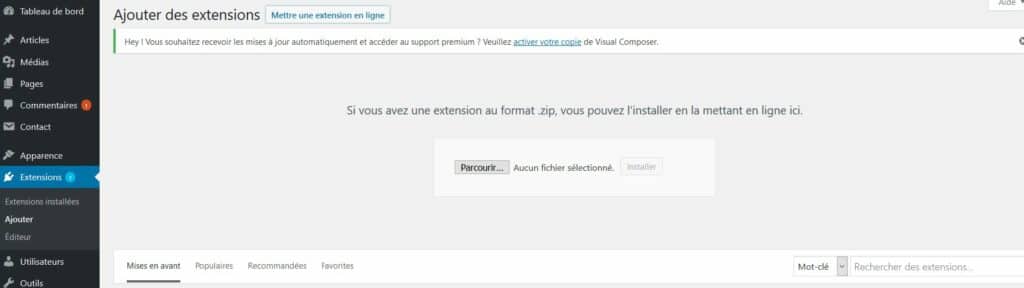
Next, at the top of the page, click the "Upload an Extension" button. This step will bring up a form for uploading the extension. You will then need to select a file and choose the one you have already downloaded to your computer.
Once you've selected the file, click the "Install Now" button so that WordPress can download it. A success message will appear once the plugin has been successfully installed. After that, click the "Activate Plugin" button to start using the plugin.
How to Install a WordPress Plugin Using FTP
Although it’s rare, there are cases where a WordPress hosting provider imposes file restrictions. This can limit your ability to install a plugin from the admin panel. If this happens to you, the best course of action is to install the plugin manually using FTP. However, this method can be difficult for beginners.
To install it successfully, start by downloading the extension’s source file and then extracting the ZIP file on your computer. Extracting the extension’s ZIP file will create a new folder with the same name. You’ll then need to manually upload this folder to your website using an FTP client. Using the FTP manager, you’ll need to log in to your host using your FTP username and password.
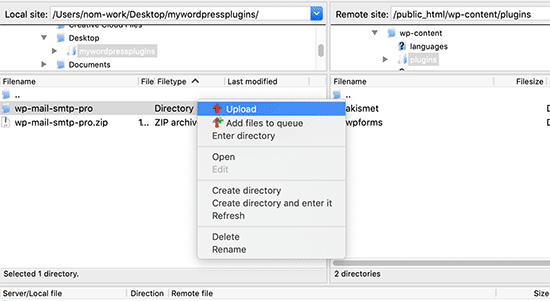
If you don't have either of these, you'll need to contact your WordPress hosting provider to find a solution to this problem. Once everything is set up, open the FTP client on your computer to connect to your website. To do this, you’ll need to enter the information provided by your hosting provider. Once you’re connected, go to the /wp-content/plugins/ folder on your website.
Next, upload the folder extracted from the ZIP file to the /wp-content/plugins/ directory on your web server. Once the files have been uploaded, go to the WordPress admin area. Then click the “Plugins” link in the admin menu, and you’ll see that your plugin has been successfully installed on the Plugins page. Finally, click “Activate” to start enjoying the benefits of the plugin.
How do I update WordPress plugins?
Extensions are created by third-party developers. As such, most of them continue to make changes to their extensions to improve their performance. Whether it’s adding new features or striving to improve code quality, developers release these changes as updates.
Your WordPress plugins should always be up to date. This ensures that various changes are automatically applied to your site, which enhances WordPress security and improves your website's functionality.
Process for Updating WordPress Plugins
When you start using WordPress, it comes with a built-in update feature. This feature automatically checks for updates. It also displays notifications as soon as updates are available for your plugins, software, and core WordPress themes. Updates can also be installed manually.
To do this, simply go to the Dashboard page and then to Updates. For plugins, when a new update is available, a notification appears in the Plugins menu in the WordPress admin bar. There is a notification under each plugin that has updates available. To install these updates, simply click the “Update Now” link.
How do I perform a bulk update of WordPress plugins?
When you need to make multiple updates to your website, you can use the option to update extensions in bulk. To do this, go to the Extensions page and click the link for the extension you want to update. This will display a list of all the extensions for which updates are available.
You will then need to select them all and choose “Update” from the drop-down menu. However, before updating the extension, it is essential to click the “View version details” link. This step allows you to see the various changes made by the extension’s author.
This ensures you’re kept informed of any changes that may be made in case something doesn’t go as planned. When it comes to security updates, we often wait a full week before updating the extension—unless the release notes specifically indicate otherwise. This time frame allows for the detection, reporting, and correction of any errors.
Can you cancel the WordPress plugin update?
In some cases, updating a plugin can lead to unexpected results. Sometimes, certain features of the plugin may not work properly. When this happens, the first thing to do is to deactivate the plugin. The “Deactivate” link is available as soon as you go to the Plugins page in the WordPress admin area. Clicking “Deactivate” under the plugin that isn’t working properly will resolve the issue.
How can you find the best WordPress plugins?
There are over 55, 000 WordPress plugins available—and that’s just in the free WordPress plugin directory. There’s also a wide variety of paid plugins. This can pose quite a few challenges for people who don’t have much experience.
Finding the best plugin for the functionality they need can therefore be tricky. By using the WordPress directory, you can find plugins based on your specific needs.
Difference Between Installed and Active Extensions
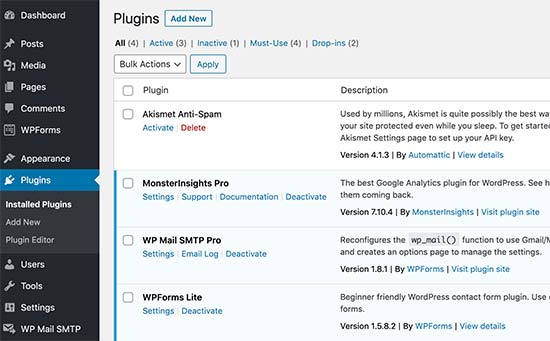
With WordPress, you can install a plugin even if you don’t use it at all. To use a plugin on your site, you must activate it. By looking at the Plugins page in the WordPress admin area, you can see which plugins are active.
They are highlighted with a blue background. As for extensions on a white background, they are not active, even if they are installed on your website. Therefore, you cannot use them. They may even be removed.
Removal of inactive plugins and the ability to install them in WordPress
When you’re not using a plugin, the best thing to do is to remove it from your website. As for the number of plugins you can host on WordPress, the possibilities are endless. So you can install as many as you want.
In fact, the number of plugins has no impact on your website’s speed. Rather, it is the quality of the plugins that can affect your website’s performance. A poorly coded plugin can therefore cause problems for your site and affect its load time.
Can you uninstall a WordPress plugin?
You can uninstall a WordPress plugin. To do so, go to the Plugins page in the WordPress admin area. Since this plugin is currently active, you’ll need to deactivate it before you can remove it. Once it’s deactivated, simply click the “Remove” link to remove it from your website.
How should you choose between free and paid extensions?
There are thousands of free extensions available. So, there’s a good chance you’ll find one that offers the same features as a paid extension. You’ll need to take the time to thoroughly search for the free extension you need and use it if you manage to find it.
However, it’s important to know that free extensions are provided “as is.” This means you receive no promise of support and no warranty of any kind. The developer may therefore stop working on the extension at any time. If you’re in a field where support and regular updates are essential, you’ll be better off with a paid extension.
Is it possible to get help by using a free WordPress plugin?
Free WordPress plugins are available. They are offered without a guarantee of support. However, if it’s a high-quality plugin, it will provide you with limited free support through the official WordPress support forums. To post your question, simply go to the plugin’s page and click on the “Support” tab.
After installing a WordPress plugin, what should you do?
Once you've installed your extension, you'll need to enable it. After that, you'll need to configure it. At this point, it's up to you to make the decisions. You'll then need to make sure everything is working properly on your website. It's best to do this in incognito mode.
Make sure the feature you're looking for is actually there, and you'll have successfully completed the installation. Things might not go exactly as planned. If that happens, there's no need to worry. Either you're close to your goal, or you may have installed the wrong extension. You'll just need to go back and find the right one to install it again.
The Different Types of WordPress Plugins Available
You now have some information about WordPress plugins and how they work. There are several types of plugins. Let’s now take a look at a few categories of plugins, the ones that could be considered the best, and how they can benefit your website.
Extensions to Address Security Issues
In addition to having secure WordPress hosting, protecting your WordPress site is just as important. Indeed, when websites are not secure, they remain vulnerable to malware, data theft, and financial loss. WordPress websites are constantly targeted by attacks.
For example, Wordfence, one of the best security plugins, recorded more than 4 billion attack attempts in 2020. By using WordPress security plugins, you can be sure to thwart these attacks. Most of these plugins include features such as firewalls and active monitoring. They can also block certain malicious IP addresses.
Extensions to Ensure Website Optimization
More than a third of visitors abandon websites that take more than three seconds to load. So you can see that, based on this, it’s important to keep your site well-optimized. There’s a solution for ensuring your site’s performance continues to improve. Website optimization extensions clean up your site’s code and database.
Contact Form Extensions
With the contact form, your visitors can easily get in touch with you. This saves them from having to search through the entire website to find your email address or other ways to contact you. It is, therefore, a tool that has a significant impact on the user experience on your website.
If your chosen theme doesn’t include a contact form, there are thousands of contact form plugins available for WordPress sites. These plugins offer a variety of features, including options for managing and customizing your forms, giving you complete control over them.
Caching Extensions
Caching extensions allow you to create static copies of web pages that are served to visitors. This tool helps reduce the amount of data exchanged between the browser, the WordPress database, and the server.
This can significantly improve a website's speed. Many website optimization plugins include caching features. However, some plugins are dedicated exclusively to caching.
Reservation Extensions
Booking extensions offer convenient features for different types of online businesses. They allow your visitors to schedule an appointment with you or book your services right away.
If you run an online business, you might benefit from booking plugins or a suitable theme. This could include restaurants, rental or ticketing services, freelance creatives, or professional practices.
Google Analytics Extensions
Google Analytics is the perfect tool for tracking a website’s performance and offers numerous benefits. It provides you with essential information that can help you resolve issues and improve your site’s overall performance.
There are several ways to add Google Analytics functionality to WordPress. However, the easiest way to do this is to install a Google Analytics plugin.
SEO Extensions
WordPress SEO, or search engine optimization, is the practice of optimizing both a WordPress site and its content. By choosing to use it, you can improve your ranking in search results.
This is a fundamental technique for increasing organic traffic to your website. This will help you generate sales if you have an online business. It can take several years to master SEO.

However, there is an SEO extension to help you implement these best practices successfully. For example, if you use an SEO extension for your blog content, it analyzes your content and makes suggestions directly from within your post editor.
Extensions for pop-up windows
Pop-up windows, which appear on websites, are forms. Pop-up extensions are important because they make it easy to add pop-ups to your web pages—even if you don’t know how to code. This is a perfect way to communicate with your visitors and find out what interests them. You can also use them to build a mailing list, which is essential for growing your customer base.
Image Optimization Extensions
When you optimize images properly, they’re a perfect way to make your content more appealing. Poor image optimization can lead to poor search engine rankings, slow loading times, or even storage overload. Using WordPress image optimization plugins allows you to compress the file size of your images without significantly compromising their quality.
WordPress Plugins: A Summary
Throughout this tutorial, we’ve taken the time to help you with many aspects of WordPress plugins. You’ve likely now understood the process for installing a WordPress plugin on your blog or website. From now on, you can enhance your site’s performance and functionality—even if your technical knowledge or skills in this area are limited.
When you have no idea which plugin to choose, start by thinking about your website’s weaknesses. After that, you can browse the available plugins to compare the features that matter most to you. These include, for example, compatibility, the most recent update, and the reviews the plugin has received. If there’s one clear advantage to using WordPress, it’s the flexibility it offers. By using it, you have the freedom to install a wide variety of plugins, whether they’re free or paid. The key is to understand—even as a WordPress beginner—what plugins are, how they work, and how to manage them.
This tutorial has covered all the basics of WordPress plugins. With this foundation, you now know what to do next to find the best plugins to help you achieve your specific goals. You’ll now be able to get the most out of your website.