At first glance, getting to grips with WordPress and its ecosystem can seem like a daunting task if you lack certain essential basics needed to understand it. Themes, plugins, web hosting, domain names, the HTTPS protocol, SSL certificates…Do these terms mean nothing to you? Yet you need to master this basic knowledge to navigate WordPress with confidence.
However, don't panic. In this article, we'll share the 9 things you absolutely need to know to get off to a good start with WordPress.
What is WordPress?
How can you truly understand WordPress without knowing its origins and what it's used for?
To begin with, WordPress is the most popular and widely used free, open-source content management system ( CMS ) in the world. As of June 2021, nearly 41.7% of all websites were powered by this CMS, making WordPress the global market leader. Every day, more than 500,000 new websites go live. Do these numbers make your head spin? They should! And you’re probably wondering why WordPress is so popular.
WordPress is known for its customization options and infinite flexibility. The vast number of themes, plugins, and widgets, along with its strong performance in search engine optimization, make it the ideal solution for all types of projects with a wide range of requirements. Originally developed as a tool for creating blogs, the WordPress CMS has, over the years, built up a wide range of features, evolving into the powerhouse we know today.
WordPress.org vs. WordPress.com: What Are the Differences?

Have the benefits of WordPress convinced you, and are you ready to choose the undisputed leader in CMS? Great. First and foremost, it’s important to clarify one point, because you’ll often hear people talk about two sites with similar names—yet they’re so different.
WordPress.org
WordPress.org is the official website for the original, non-commercial version of WordPress; this is where you can download WordPress.
WordPress.org lists a large number of free plugins and themes, offering you unlimited customization options at your fingertips. There, you’ll find comprehensive documentation, video tutorials to help you learn and improve your WordPress skills, a forum with an active community, and articles on the latest CMS news.
WordPress.com
Not to be confused with WordPress.com, the WordPress.com service is a simplified version of WordPress offered by an American company. This site provides a turnkey solution for hosting your content online. However, although the company stands out for its low-cost plans, WordPress.com remains very limited.
Purchasing plugins for your website’s SEO or for your online store will therefore require you to pay. Furthermore, the lack of several key features means this service isn’t necessarily suitable for all types of projects. For example, you won’t be able to place your own plugins and ads on your site, or install custom plugins and themes.
Hire a web design agency
When you want to start a website development project but lack the technical knowledge to carry it out, you can quickly find yourself at a loss. Given the sheer number of elements you need to master and consider to create an effective website with WordPress—and the fact that you’ll eventually need to work with the source code to take your site further—it’s highly recommended that you hire freelancers or web agencies like INGENIUS.
These WordPress specialists can provide you with expert advice and a high-quality solution without you having to tear your hair out over a piece of HTML that just won't work the way you want it to.
Do HTML, CSS, PHP, or JavaScript seem like foreign concepts to you—or like dialects from alien civilizations? Does deciphering a line of PHP code seem like an insurmountable challenge? Are terms like SEO, plugins, themes, and digital marketing all beyond your understanding? Delegate!
In fact, working with a WordPress web agency for the design and ongoing management of your website will ensure you get the best web solution for your project and business. Composed of experienced professionals and specialists, a web agency typically provides comprehensive , turnkey services that span several areas: web creation and development, digital strategy, design, maintenance and monitoring, security, editorial content creation, SEO, social media, and more.
At INGENIUS, our WordPress-based services effectively meet our clients’ needs thanks to a team of recognized experts. We guarantee high-quality support by paying close attention to even the smallest details that can make our clients’ projects a success.
Our solutions cover the full range of possibilities offered by WordPress: creation of custom WordPress websites; turnkey websites for coaches, artisans, and solopreneurs designed to convert leads into customers; a service for creating WooCommerce dropshipping sites that guarantee tangible results; creation and management of e-commerce sites; maintenance and security; and an optimized SEO service.
Interested? We invite you to explore all our services and subscription plans on our website —which, of course, was built on WordPress. 😉
What is a web hosting provider?
If you decide to use WordPress, you’ll hear the terms “web host” or “web hosting” at some point. But what exactly are they? Well, think of it as a rental service—but for digital space. You rent storage space on secure servers to store your website’s data. That way, you can access it anywhere, anytime.
Today, there are a large number of providers on the market offering website hosting in various forms: shared hosting, virtual hosting, dedicated hosting, and so on. In France, OVH, 1&1, and PlanetHoster are among the leading French players in the sector.
INGENIUS takes special care to work with the best web hosting providers. Ensuring that our clients receive hosting services that meet their expectations in terms of quality and speed is a top priority.
What is a domain name?

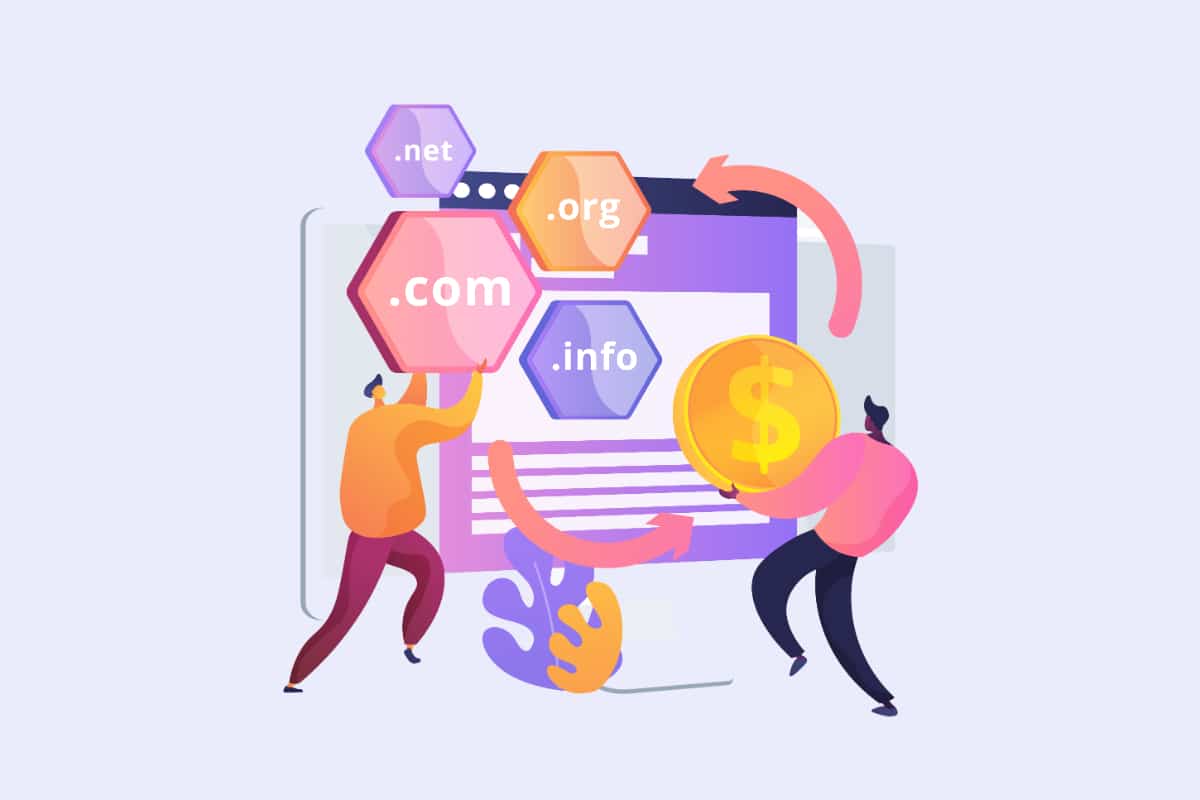
A domain name is an identifier—or, in other words, the digital equivalent of your mailing address—that you enter into a web browser’s address bar to access your website. A domain name consists of a string of characters followed by an extension that begins with a period. Depending on the country or the type of project, there are several types of extensions:
- country-code top-level domains such as .fr, .be, or .uk;
- generic domain extensions, the best-known of which are .com, .org, and .net.
Take the time to carefully consider the domain name you want to purchase. A short, easy-to-remember name is best. As for the domain extension, that will depend on your project and your goals. If you’re unsure, we highly recommend seeking advice to help you choose the most appropriate domain extension and name.
Which WordPress website is right for my project or business?
In 2021, there were 1.86 billion websites on the internet. However, even within this staggering number, we see the same design patterns recurring. Let’s take a look together at the different types of websites we can find online.
The showcase website
As the name suggests, a showcase website is the digital storefront for your project or business—much like the storefront of your traditional neighborhood florist. The purpose of a showcase website is to present your business, product, or service on a single page. It is designed to establish an online presence for a company, local government, artisan, or individual by highlighting the essential elements of a project or business—but without direct sales. A showcase website is therefore an excellent way to convert new prospects into customers.
E-commerce
If you are among the 81.4% of French people who shop online, you are no doubt familiar with e-commerce.
Simply put, an e-commerce site allows a business to sell a product or service to a consumer online. These sites enable users to browse through different categories of products, view product details, add items to a shopping cart, confirm their selection, and finally complete the online payment after entering their personal information.
The Blog
A blog is an online space similar to a journal. It allows one or more authors of a website to express their views on a topic.
Blogs are often used by entrepreneurs and companies to showcase their expertise on a specific topic, while also allowing them to implement a content strategy and improve their search engine optimization (SEO).
A web app
Although the term is less well known to the general public, a web app (or functional website) is a type of site used every day. It is a web application that can be used online via a web browser and offers a high level of interactivity with the user. Examples include social media platforms like Facebook or Twitter, online email services such as Gmail, or online booking sites like Airbnb.
An intranet site
An intranet site allows users to stay informed, communicate, and work together. This type of restricted-access site is often used by companies or local governments that want to develop a work and communication tool that brings all their employees together in a single space.
A wiki
A wiki is a website that is open to everyone and is collaborative and user-contributed. It allows users to pool their knowledge to build a database on any topic. The most famous example is Wikipedia, but there are many others that focus on specific topics.
Post, plugin, theme… What do these terms mean?
Here’s the situation: you’ve decided to use the WordPress CMS to build your website. However, there’s one little thing that’s bothering you—you don’t know your way around WordPress. You often hear people talk about plugins, themes, and posts without really knowing what all these terms mean.
Don't panic! We've thought of everything, and here are the essential points you need to know to easily get started with the WordPress ecosystem.
An article or post
Articles (or posts) are the backbone of your blog or website. In its early days, WordPress was designed as a blogging platform before it was expanded to include all the features we know today for creating all kinds of websites.
An article allows you to highlight text, format it, and insert media to discuss a specific topic. It is associated with a publication date and an author to create chronological content.
It can be shared on your social media platforms to promote it. Share buttons within the article also allow your visitors to share it. Readers can interact with the article in a dedicated comments section to share their opinions or join a discussion. Adding the article to an RSS feed will allow readers who subscribe to your feed to receive it as soon as it’s published on your website.
For a business or project, articles should not be overlooked. They play a fundamental role in a well-thought-out editorial strategy. They help improve a website’s search engine optimization (SEO) to position its content at the top of search engine results.
One page
A page allows you to create static content, such as a home page, a “Contact Us” page, or an “About” page. This is evergreen content that is meant to stand the test of time, unlike blog posts, which are used to discuss a specific topic at a given moment.
Here, there is no author, publication date, or comment section. The key elements and features of your project or business are presented in a structured manner, following the same hierarchy used throughout your pages.
A plugin
A plugin is an add-on for WordPress that allows you to add new features to your website or expand existing ones. These add-ons are written in a programming language called PHP and are developed by members of the WordPress community; they are not developed by people who work directly for WordPress.
Today, there are tens of thousands of plugins available. Most plugins are free, but some require a fee. Whatever your needs may be, there’s a plugin to meet them.
A theme
In WordPress, a theme is a set of template files and CSS style sheets that determine the visual identity of your website.
There’s a perfect theme for any business. Each theme has its own unique design and features to ensure your content and user experience stand out. Do you run a travel website? Create a theme that adapts to the seasons! The advantage of WordPress themes is that they’re easy to manage, and you can modify them at any time as long as you know how to edit a few lines of PHP and CSS code.
On the internet, the choices are vast. There are a large number of free and paid themes available; WordPress.org lists many of them. Can’t find that one perfect theme? No problem! You can definitely create your own custom theme to meet your every need. But now more than ever, you’ll need to be familiar with web programming languages. The other option is to entrust the creation of your website to a professional web agency like INGENIUS, which will craft the ultimate custom WordPress theme to help your business take off.
The Security of My WordPress Site
Security is a crucial issue on the Internet. Since WordPress is an open-source CMS, it’s best to ensure your site’s security. So be careful about the themes or plugins you install! This is especially important since the 2018 GDPR requires you to protect your data and that of your users.
To secure a website, there are several best practices you should follow, such as using security plugins, performing regular updates, and customizing the URL of your login page. It is also possible—and even essential—to migrate your site to the HTTPS protocol by installing an SSL certificate.
HTTPS is a security protocol that ensures the protection of a website user’s data. This protocol is visible to users who click on their browser’s address bar when visiting any website operated by companies that prioritize data security. It is indicated by the letters “HTTPS” at the beginning of the URL and is accompanied by a padlock icon and the message “The connection is secure.”
The HTTPS protocol is also a way to ensure that the website you’re visiting is the real one—not a fraudulent copy. It aims to reinforce the perception of reliability among your target audience, prospects, or customers, and thus indirectly improves your search engine rankings.
Migrating your website to the HTTPS protocol involves installing an SSL certificate. Much like an ID card, an SSL certificate verifies a website’s identity. Since WordPress requires an SSL certificate to function properly, you should install one as soon as possible.
SEO for My WordPress Site

First and foremost: once you set out to create and manage a website, there’s no getting around SEO.
SEO comes from the English term “Search Engine Optimization,” which means “search engine optimization” in French. Depending on preference, SEO is also referred to as natural or organic search engine optimization.
SEO is a set of best practices and actions designed toimprove a website’s ranking in search engine results and thereby drive more traffic for specific keywords.
WordPress is one of the best content management systems (CMS) for SEO. With an effective SEO strategy and the addition of original, rich, and relevant content, you can easily increase the visibility of your online project or business.
However, optimizing your WordPress website for SEO is a long-term process that requires mastery of three fundamental pillars: technical aspects, content, and reputation. To help you with this process and attract more customers through organic search, INGENIUS offers a way to save hours of trial and error by entrusting your SEO to professionals.
Our automated Genius SEO service focuses on the three pillars mentioned earlier: link building, content creation, and optimizing the performance and speed of your WordPress site… In just 8 months, you’ll see an overall improvement in your website’s search engine rankings.
To learn more about our Genius SEO service, we invite you to visit our service page for more details.
Ready to get started?
Have you made it through these 8 must-know tips for getting started with WordPress without closing your browser? Congratulations!
What about you? If you had to name one essential thing to know to get off to a good start with WordPress, what would it be? We're curious!